If you prefer to listen to this post, an audio version is available here…
“Success in golf depends less on strength of body than upon strength of mind and character.”
– Arnold Palmer
I was reminded of this quote as I watched the rain-delayed and heartwarming finish to this year’s U.S. Open Golf tournament, held as it traditionally is, on Father’s Day. Golf has many traditions, and one that I marvel at the most is the honesty and integrity it requires of its players. Golfers must accurately report their scores, call penalties on themselves, and adhere to the rules of the game even if the rest of their group is too far away to see what they do. Golf calls for good character.
Of course, not everyone who golfs follows its rules of play and etiquette. If that is a pattern, that can point to their character, too, and not in a good way.
I don’t mean to suggest that everyone who plays golf appropriately is of good character. Character is demonstrated through consistent patterns of behavior, and – as with everything – context matters. Is it a one-time behavior or a behavior exhibited only in certain circumstances? Is it a reflection of a cultural norm? Arguably, what is “good” character to one person may be questionable character to someone else. Still, there are widely held values that people across the globe deem desirable, among them: honesty, respect, responsibility, fairness, and compassion, according to ethicist Rushworth Kidder.
Not all values are ethical in nature, but how they are pursued may have ethical or moral implications. People hold values; how they act on them is their character. Character is dynamic and evolves, shaped by our own practice, self-reflection, the people around us, the stories we are told, the organizations with which align, and our times overall.
It is said that a person’s true character often comes through when they are faced with challenges. Leaders face many challenges in today’s volatile, uncertain, complex, and ambiguous times. Leaders can have good intentions to navigate these times, yet how they act on them determines how those behaviors will impact others. Sometimes there is a gap between intent and impact, and leaders, through their behaviors, can only influence how others will rate the quality of their character.
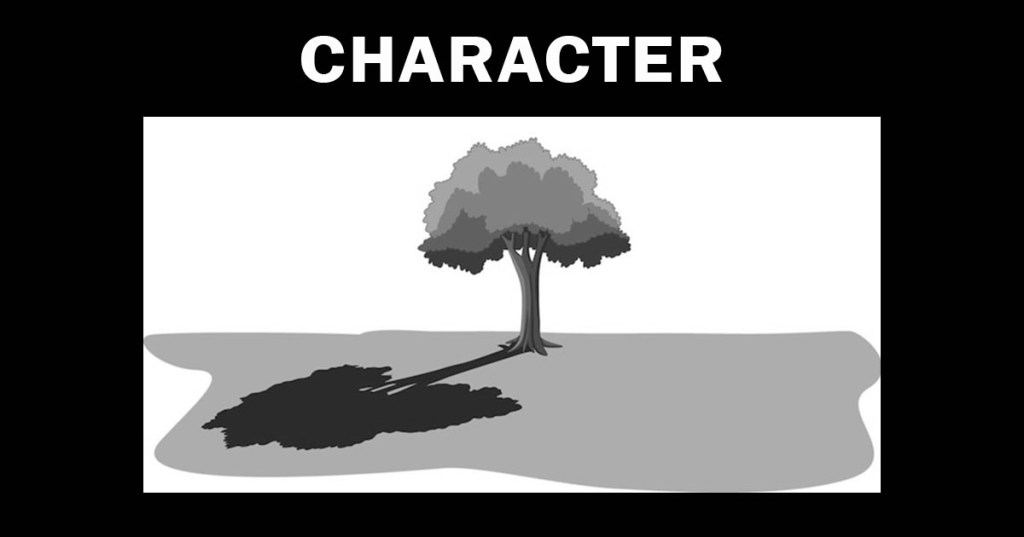
This makes me think of another quote, this one attributed to a well-known leader, Abraham Lincoln: “Character is like a tree and reputation like a shadow. The shadow is what we think of it; the tree is the real thing.” Sometimes, leaders worry more about the shadow, the reputation, and think less about the substance of the tree, their character. Of course, chasing shadows is a losing proposition. Leaders who stay focused on their good character can stand tall and strong, letting the sun shine and cast shadows where it may, knowing that even on cloudy days, the tree stands firm.

 Live Both And -- The Blog
Leave a comment